


Your CMO Reports on Likes. Your CFO Wants Pipeline. Who Is Getting It Wrong?
Does your CMO report on post likes? Your dashboard might look busy, and your marketing department might appear remarkably productive, but what happens when the CFO asks how much qualified pipeline that activity has generated?
I can guarantee that the conversation becomes considerably less enthusiastic if nobody can provide a clear answer.
Do you sit through monthly marketing reviews where impressions and engagement rates are celebrated, but nobody can explain how much activity has translated into qualified opportunities?

If so, you might have a huge leadership problem.
Marketers often seem more concerned with demonstrating that something is happening than proving that something commercially meaningful is happening. Publishing 30 LinkedIn posts is not the same as creating demand, just as generating 10,000 impressions is not the same as getting a buying committee to consider your business.
The solution is not another subscription, another AI agent or another automated campaign sequence, but bringing back marketers who understand how to make things happen.
The Tooling Is Not What Constrains Your Marketers, It’s The Lack Of DOERS In Your Team.
Let me take you back to 2024, when I was working as an in-house marketer.
I once worked under a manager who regularly made impossible assignments part of my responsibilities. On one occasion, I was asked to deliver an email campaign without access to email design software, a marketing automation platform or a dedicated email builder.
I was given an Excel spreadsheet, Microsoft Word and Outlook! And no, this was not 2014.
We were targeting the construction sector with short-shelf-life products that would otherwise go to waste. The objective was straightforward: put relevant products in front of existing industry contacts and generate sales opportunities before the stock became unusable.
What would you have done as the CMO?
I opened Microsoft Word, inserted a table and started building the email manually.
The first row contained the company logo and links to relevant e-commerce pages, followed by a full-width hero image linked to the offer. Beneath that, I created a headline, introductory copy and a three-column product grid with images, descriptions and coloured rectangles linked to individual product pages as call-to-action buttons. I added website links, a footer and an opt-out disclaimer, then checked the layout on mobile, desktop and dark mode and tested every link.
Was it perfect? Not quite, but it was good enough to look considerably more polished than the resources suggested it could be. In fact, I was accused of making it look too polished.
The recipients were warm, relationship-led contacts, and the sending domain already had an established reputation.
The contact list was incomplete, so I decided against personalisation that could have introduced errors. Instead, I copied the finished layout into Outlook, removed the table borders and prepared the recipient list.
I ran the mail merge for the 100 contacts. The result? Two qualified leads from 100 contacts.
Sales was happy. During the recap meeting, the sales team asked whether we could replicate the campaign on much higher-revenue products.
My manager decided to discontinue it entirely!
The number one lesson here? It is hugely important to recognise toxic management that actively prevents people from delivering results.
A much bigger commercial lesson?
I did not need a six-figure martech stack to identify an opportunity, understand an audience, construct an offer, build a campaign and get it in front of the right people.
I needed commercial instinct, technical competence, resourcefulness and the willingness to execute, because this is precisely the capability that many businesses are now at risk of losing. This problem extends beyond marketing execution into the wider enterprise go-to-market model, which I explore in The Billion-Dollar Illusion: Why Enterprise Software Go-to-Market Strategies Are Fundamentally Broken.
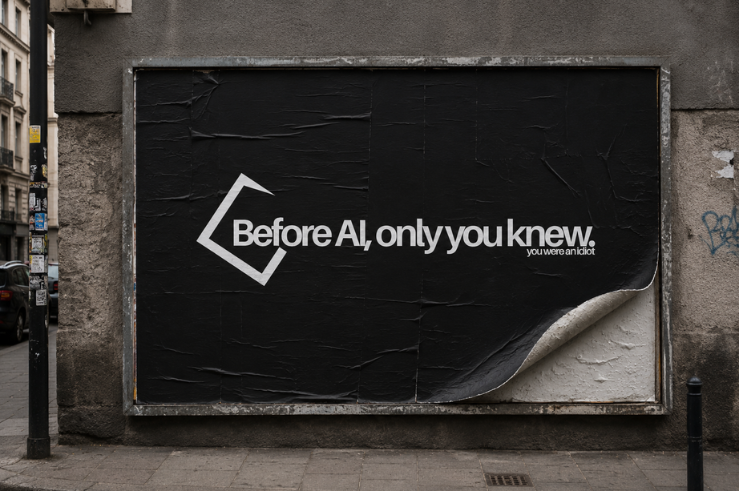
AI Credits Are Not A Replacement For Commercial Marketing Capability
Marketing leaders are being pushed harder than ever to generate qualified pipeline, while businesses are simultaneously reducing the number of people capable of delivering the actual marketing work.
People who understand positioning, audience behaviour, campaign execution, technical implementation, messaging and commercial strategy are increasingly being replaced by agencies, software subscriptions and AI-generated instructions.
The assumption seems to be that if a business gives its marketing department enough tools, it will eventually produce enough pipeline.
The fact is that handing your CMOs a substantial budget without requiring them to understand how campaigns are built, how channels work and how attribution is measured poses a considerable risk that the entire marketing function will become an exercise in outsourcing, including the thinking.

AI can research markets, analyse customer feedback, produce first drafts and accelerate execution, making it a useful part of any modern marketing team.
But come on, folks, AI cannot compensate for the absence of a commercially competent person directing the work.
A predictive model might recommend an audience, estimate engagement, suggest a sending frequency and produce a beautifully structured sequence, all while predicting a high probability of success.
But it does not know whether your proposition is sufficiently differentiated, whether the timing is commercially appropriate or whether the message will resonate with the people who commercially influence the buying decision.
A campaign that performs exceptionally well for a construction supplier might be completely irrelevant to a SaaS business selling enterprise software. A messaging sequence that works for a founder-led company targeting 50 accounts might fail spectacularly when deployed to 5,000 procurement professionals.
This is because context, experience and execution matter and someone needs to be accountable for understanding all three.
The real cost of replacing skilled practitioners with AI is not necessarily the subscription fee, but the opportunity cost of campaigns that look impressive in presentations yet fail to create commercial opportunities.
Your CFO is unlikely to care how many AI credits your marketing team has consumed or how many posts you have published. They will want to know whether marketing is generating qualified pipeline, converting it efficiently and contributing to profitable growth.
Coca-Cola can experiment with AI advertising. Your B2B SaaS brand cannot.
Whenever the discussion turns to AI-generated advertising, somebody inevitably brings up Coca-Cola and how B2B should become more like B2C, because we still sell to people. And I get it, there is a legitimate reason for that.
In System1’s Test Your Ad research, Coca-Cola’s AI-generated Holidays Are Coming remakes scored the maximum 5.9-star rating in both 2024 and November 2025. When Coca-Cola returned for a third consecutive year in November 2026, the new AI spot still scored 5.7 stars, generating happiness in 68% of viewers and sitting right at the UK average for viewer contempt.
As Andrew Tindall , Chief Growth Officer at System1, wrote in his November 2026 analysis for The Drum (Coca-Cola wouldn’t make a third AI Christmas ad if online backlash mattered enough), loud social media outrage rarely reflects how the broader public feels and if AI were hurting Coca-Cola's business, the trucks would already be parked in a garage.
Yet there is an important distinction that deserves attention: Coca-Cola is not an unknown company trying to establish its credibility in a competitive market. It has decades of brand recognition, distinctive brand assets, emotional associations, and established consumer trust.
Its AI-generated advertising rides on an enormous reservoir of pre-built brand equity.
A B2B SaaS company does not have that luxury. In the same The Drum column, Tindall noted that while Coca-Cola doubled down on AI, a wave of other major brands pivoted in the opposite direction, leaning into claymation, stop-motion, puppetry, and hand-drawn animation.
His explanation applies tenfold to B2B: When anything can be generated in seconds, visible effort signals you care. A consumer watching a festive soft-drink commercial is not assessing vendor credibility, comparing enterprise software architectures, evaluating implementation risk, or justifying a six-figure investment to a procurement committee.
A B2B buyer spends their morning deleting automated LinkedIn InMails, ignoring generic cold emails, and scrolling past near-identical AI-generated thought leadership.
B2B buyers don't necessarily universally despise AI, but unfortunatelly they are increasingly intolerant of content that offers nothing beyond the automated appearance of expertise. The lack of visible human effort in this example signals a lack of care.
This is also why formulaic B2B marketing is losing its edge, as explored in The End of Safe B2B Marketing and the Demand for Attention Through Risk. Coca-Cola can afford to let AI remix a 30-year-old holiday asset because the trust is already banked. For a B2B SaaS brand still earning that trust, visible human thinking is the proof that you are worth listening to.

LinkedIn Is Becoming A Particularly Uncomfortable Place For Generic AI Content
The study analysed more than one million posts scanned between April and June 2026 by users of Pangram’s browser extension who opted to share scan data. It found that 40.5% of sampled long-form LinkedIn posts were flagged as fully AI-generated. This is a large dataset, but it is not a random, representative sample of all LinkedIn publishing, and the classification depends on an AI detector.
LinkedIn subsequently introduced its native "Seems Like AI Slop" reporting option.
In its 15 September 2026 platform update, LinkedIn confirmed that more than one million members had used the feedback option since its August rollout.
LinkedIn also said that views of content it classified as AI slop had fallen by 40% following its content-quality interventions. This is the platform’s own reported figure, not an independently verified estimate of the effect of its interventions, and it does not mean every AI-written post receives a 40% distribution penalty.
In October 2026, LinkedIn content studio Flypost published research examining 2,016 posts, one post per month from 336 B2B creators, between April and September 2026. It used the Pangram AI detector to classify content. The engagement comparison covered the 236 creators who had both AI-classified and human-written posts, controlling for format, length and publishing month.
The findings were significant:
Mostly AI-written posts received approximately 24% fewer reactions.
Mostly AI-written posts received approximately 12% fewer comments.
The research has limitations: it relies on an AI detector, does not control for the subject of each post and cannot establish that AI authorship caused the engagement differences. Flypost also sells AI-assisted writing tools, a commercial interest worth considering when evaluating its findings.
Nevertheless, the commercial implication is difficult to ignore: producing more content does not automatically produce more audience interest.
The original findings are available in Flypost's October 2026 research release.
What is the reason somebody should stop scrolling, read your content and remember your company?
If your answer is that your AI tool generated a well-structured post with an engaging hook, you have described a publishing process, not a marketing strategy. The bigger challenge is to create something distinctive enough to earn attention.
SaaS Lead Generation Starts Before Somebody Fills In Your Demo Form
This is where the conversation needs to move away from social media engagement and towards the real-life mechanics of B2B buying.
One of the most important mistakes SaaS marketing teams make is treating a form submission as the beginning of a buying journey, because it often isn't.
By the time a prospect requests a demonstration, they may already have researched the problem, discussed solutions internally, compared suppliers and formed a vendor preference.
The 6sense 2026 Global B2B Buyer Experience Report provides a particularly useful illustration of this behaviour.
The report analysed 4,607 B2B buying journeys across completed purchases and no-decision evaluations, including software, services and physical goods, rather than SaaS purchases alone. It found that:
Buyers first engage sellers roughly 59% of the way through an average 10.3-month buying journey.
Approximately 91.4% of buying groups have ranked their shortlist before first contacting sellers.
The vendor buyers prefer before contacting a seller ultimately wins approximately 82% of the time.
Your potential customers are researching vendors, discussing requirements and forming preferences long before your sales team receives a notification from the CRM.
That means your marketing function has a responsibility that extends well beyond generating inbound enquiries.
It must make your business recognisable, credible and relevant during the period when buyers are deciding which companies deserve to be considered.

Your Brand Needs To Exist In The Places Where Buyers Conduct Research
Think about the way a SaaS buying committee evaluates a product today.
A potential customer might start with a Google search, compare providers, read independent reviews, ask colleagues for recommendations, consult an industry publication and use an LLM to summarise competing solutions.
They probably will not even visit your website during the initial stages.
They might encounter your brand through somebody else's article, an analyst report, a comparison page, a customer review or an AI-generated search summary.
If your strategy focuses entirely on driving traffic to your website, you are overlooking a significant part of the buying journey.
This is also why I would challenge the traditional obsession with ranking for a handful of commercial keywords. Visibility in Google AI Overviews and other answer engines is becoming an additional part of brand discovery.
A particularly interesting benchmark was published by Walker Sands and reported by Search Engine Land in June 2026.
The benchmark analysed more than 45 million relevant keywords across 828 enterprise B2B companies. It found that the median enterprise B2B brand appeared in just 3% of relevant AI Overviews. Walker Sands also reported that AI Overviews appeared for nearly half of the relevant search results in its dataset.
I would not build a strategy around an arbitrary promise that your brand must appear in the first three AI Overview citations. There is no guaranteed position, and citations vary according to the query, source selection and search experience.
Your brand should be associated with the problems it solves, the categories in which it competes and the questions that influence purchasing decisions.
That requires much more than publishing SEO articles containing variations of your target keywords.
That means having a recognisable point of view, evidence of expertise, relevant industry contributions, original research, credible third-party references and a website that explains why your product deserves consideration.
In other words, you need to become a source worth citing, by others and by AI.
The Formula For Generating SaaS Pipeline: Build Authority, Capture Intent And Convert Demand
CEO or CFO wants to understand how the business builds demand before paying to capture it.
As a CMO, you should start a marketing review meeting with those five commercial priorities:
First: Establish A Category Position That Buyers Can Understand
Your positioning should explain what problem you solve, who experiences it, why existing approaches are insufficient and why your solution deserves consideration.
A buyer does not necessarily want another platform with advanced automation and seamless integrations. They want answers from the DOERS and measurable improvements, such as how your product helps multi-site operators reduce scheduling inefficiencies.
Second: Turn Industry Knowledge Into Category Authority
Your best marketing asset may be the knowledge held by your sales, customer success and product teams, as well as your existing customers.
What are buyers repeatedly asking? What objections are preventing deals from progressing? Which industry assumptions are wrong? What are customers doing inefficiently because the market has normalised an outdated approach? What are the problems that your competitors are unwilling to discuss?
Develop original research and meaningful industry analysis, produce comparison content, contribute to relevant publications and publish externally, creating material that helps buyers understand their challenges.
Do not produce another 1,500-word article explaining what a CRM is if your audience has been using one for 15 years.
Give them something they did not already know.
Third: build visibility beyond your own website
A credible SaaS brand should have a deliberate presence across relevant industry publications, independent review platforms, analyst resources, comparison websites, professional communities and authoritative third-party domains.
Understand which sources Google AI Overviews and other answer engines cite for your most commercially important queries.
Track your visibility, monitor branded search demand, identify gaps in third-party coverage and build relationships with influential publishers.
The objective is not simply to collect backlinks, but to make your company difficult to overlook when buyers research the problem you solve.
Fourth: use paid acquisition to capture existing intent, not to compensate for weak positioning
Use paid search to capture high-intent demand, retargeting to maintain visibility and account-based campaigns to support strategically important buying groups. Test messaging against real objections and commercial use cases.
A campaign reaching 50,000 irrelevant professionals is not necessarily more valuable than one reaching 500 people from the right buying organisations.
The quality of the opportunity matters more than the size of the audience.
Fifth: connect every marketing activity to a commercial outcome
This is where the CMO needs to become particularly comfortable with numbers.
You should be able to explain how marketing activity contributes to:
Marketing-sourced qualified pipeline.
Marketing-influenced pipeline, with clear attribution rules.
Sales-accepted leads and opportunities.
Opportunity conversion rates.
Pipeline velocity and sales-cycle duration.
Customer acquisition cost.
Customer acquisition cost payback.
Closed-won revenue and gross-margin-adjusted return.
Not every marketing activity should be judged by immediate revenue. Brand building, category education and organic visibility have longer payback periods, and last-click attribution can undervalue their contribution.

A serious marketing team needs leading indicators for brand and demand creation alongside commercial measures of pipeline contribution.
The CFO should not have to guess.
What should your CMO report to the board?
If your monthly marketing report contains 20 slides about social media performance and only one about pipeline, the reporting priorities are probably wrong. I would want to see three layers of measurement.
Layer one: market visibility and demand creation.
Branded search growth.
Organic visibility for commercially relevant category terms.
AI Overview and answer-engine citation presence.
Relevant third-party mentions.
Engagement from target accounts and identifiable buying groups.
Growth in direct and organic demand.
Layer two: pipeline generation and conversion.
Qualified leads by source.
Sales acceptance rate.
Marketing-sourced opportunities.
Marketing-influenced opportunities.
Lead-to-opportunity conversion.
Opportunity-to-win conversion.
Cost per qualified opportunity.
Pipeline generated by channel and campaign.
Layer three: financial performance.
Customer acquisition cost.
Marketing acquisition cost.
CAC payback period.
New customer revenue.
Gross-margin-adjusted acquisition efficiency.
Return on marketing investment.
Revenue contribution by acquisition channel, where attribution is sufficiently reliable.
ROAS still has a place when assessing paid media, but it is not the same as marketing ROI and should never be treated as the complete picture. A campaign can report positive platform-attributed ROAS while the business loses money after sales costs, implementation, customer support and other acquisition expenses. For SaaS businesses, I would rather see pipeline quality, conversion, CAC payback, gross margin and revenue contribution alongside channel-level ROAS.
Hire Marketers Who Know What To Do When The Credits Run Out.
I am not suggesting that SaaS companies should abandon AI.
AI can make a capable marketing team considerably more productive. It can accelerate research, help identify patterns in customer feedback, assist with technical implementation, support experimentation and and the list of uses goes on.
Your senior SaaS marketer should be able to walk into a room and present at least ten commercially sensible ways to generate demand before opening ChatGPT, Claude or any other AI platform.
Your marketer should be able to build and troubleshoot campaigns, apply technical SEO and answer-engine optimisation, and explain why an investment deserves another quarter of funding.
That is the difference between someone who can operate a marketing tool and someone who can market in the category.
The Final Question Is Not How Many Likes Your Marketing Generated. It Is Whether Buyers Are Choosing Your Business.
Let's return to that original email campaign.
I had Microsoft Word, Excel and Outlook, 100 contacts, an offer, a commercial objective and the practical knowledge to build something that worked in one day.
The campaign generated two sales-qualified leads.
A two-lead campaign is not a repeatable SaaS acquisition strategy, and a 2% yield from a warm contact list tells us nothing conclusive about CAC or ROI. We would need opportunity values, conversion data, margins and subsequent revenue to establish that.
But it demonstrates something that businesses should not overlook.
The ability to identify an opportunity and execute against it is more important than the number of tools available to the person responsible for marketing.
SaaS companies need a recognisable market position, a differentiated proposition, credibility across the places buyers research and a capable marketing function that turns demand into qualified opportunities. Build authority before demanding conversion, become discoverable before the shortlist is finalised and give sales conversations a reason to happen.
And when your CMO presents the next monthly report, ask a simple question:
How much qualified pipeline did we generate, how much did it cost us to acquire, and what evidence do we have that the investment is contributing to revenue?
If the answer is another slide about post likes, perhaps it is time to stop buying more software and start investing in people who know how to do marketing.
Because your CFO is not going to approve another year of vanity metrics.
References and further reading
The following research and reporting underpin the arguments in this article. Original research and primary platform announcements are prioritised wherever possible. Where a study uses detector-based classifications, self-reported survey responses or platform-reported performance figures, those limitations are noted in the article.
Pangram Labs (July 2026). AI Content Is Everywhere on Social Media, Especially LinkedIn. Analysis of more than one million social media posts, including the finding that 40.5% of sampled long-form LinkedIn posts were flagged as fully AI-generated.
LinkedIn (15 September 2026). How LinkedIn Is Continuing to Tackle AI Slop. LinkedIn's own announcement covering its feedback feature, member reporting and the reduction in views of content classified as AI slop.
Flypost (21 October 2026). AI-Written LinkedIn Posts Get About a Quarter Fewer Reactions, Study Finds. Research comparing 2,016 posts from 336 B2B creators, including differences in reactions and comments between AI-written and human-written content.
6sense (2026). 2026 Global B2B Buyer Experience Report. Research covering 4,607 B2B buying journeys, including completed purchases and no-decision evaluations, examining vendor preferences, buying-group behaviour and seller-engagement timing.
Search Engine Land (24 June 2026). B2B Brands Rank in Google but Appear in Just 3% of AI Overviews. Reporting on Walker Sands' B2B AI Search Visibility Benchmark, covering 828 enterprise companies and more than 45 million relevant keywords.
The Drum / Andrew Tindall (09 November 2026). Coca-Cola wouldn’t make a third AI Christmas ad if online backlash mattered enough
System1 (20 November 2025). AI or No AI, Coke Gets the Christmas Love. Creative effectiveness assessment of Coca-Cola's AI-generated Christmas advertising.
The Drum / Andrew Tindall (13 November 2025). Consumers Don't Know AI Made the Ad, and When We Tell Them, They Don't Really Care. Discussion of System1's consumer research into perceptions of AI-generated advertising.
System1 (December 2025). Four Festive Themes from 2025. Further analysis of Christmas advertising effectiveness, brand familiarity and the role of AI in creative production.


